September 3, 2026
Just Back from Warsaw Glitch: AI Film, Friends and a New Kind of Montmartre
I was just in Warsaw for Warsaw Glitch, and I’m still processing it.
Warsaw Glitch is an international festival of film and animation made with AI. It was three days, 28–30 August, with four rooms running at once: screenings, panels, awards, a gala, and a lot of conversations in hallways and hotel lobbies. Krzysztof Zanussi opened it. Yes, that Zanussi, a giant of Polish cinema, standing at the start of an AI film festival. That alone says something about where we are.
The program was great. But the thing I keep thinking about isn’t any single film or panel. It’s the people.
The room
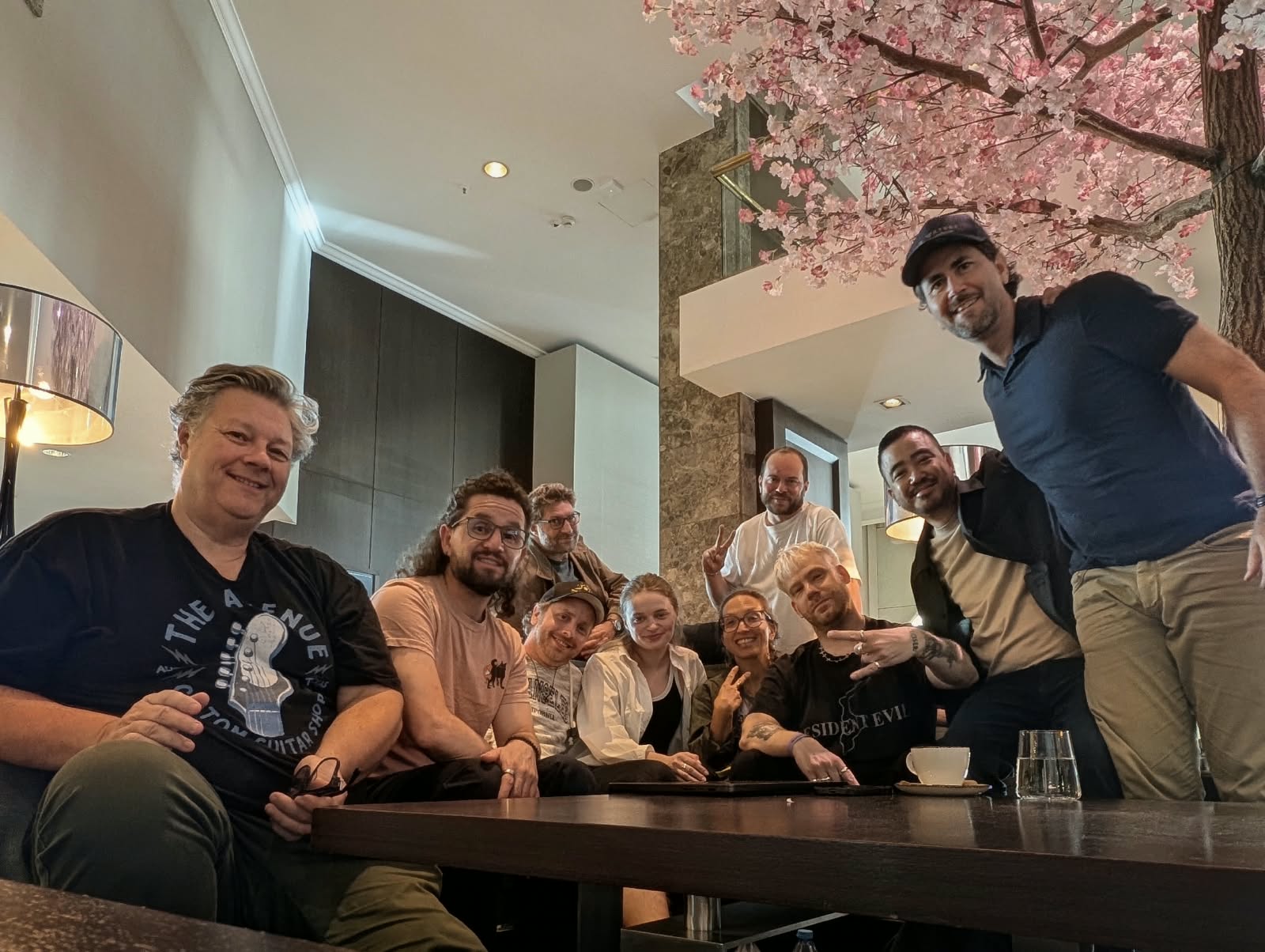
Look at the photo. A hotel lobby, a fake cherry tree, cold coffee, a laptop nobody’s looking at anymore. Filmmakers from all over the world, crammed onto one sofa, people who until recently were mostly profile pictures in Linkedin.
In there are Stuart Cripps, Oscar Burgos, Monika Kaczanowska, Billy Boman, Edmond Yang, Federico Luglio and me, plus three wonderful people whose names I didn’t catch. (If that’s you, write to me. I owe you a coffee and a proper introduction.)
Nobody in that photo is competing. We were sharing. Which model handles faces in low light? How do you keep a character consistent across forty shots? How do you get a lip-sync that doesn’t feel dead? What do you do when a client wants AI because they think it’s cheap? Everyone gave away their best tricks, freely, because we all know the same thing: none of us can figure this out alone.
That feeling is rare. I’ve felt it before, but not often. Last time was in Costa Rica where we were trying to figure out what God or The Self or Brahman is. This is at least a little easier.
Roped together
Around 1908, Picasso and Braque started working so closely that it’s sometimes hard to tell their paintings apart. They visited each other’s studios almost every day, in and around the Bateau-Lavoir in Montmartre, and took apart the way a picture works. Braque later said they were like two mountain climbers, roped together. Out of that came Cubism.
I think about that rope a lot.
Art history is full of these moments. Every time, it’s a group of people standing at the edge of something new, without a map:
- The Impressionists met at Café Guerbois in Paris in the 1860s. They were rejected by the official Salon, so in 1874 they put on their own exhibition. Critics used “Impressionist” as an insult. They kept the word.
- Gertrude Stein’s salon at 27 rue de Fleurus, where painters, writers and misfits met on Saturday nights and argued about what art could be.
- The French New Wave. A handful of critics at Cahiers du Cinéma, including Truffaut, Godard and Chabrol, picked up lighter cameras and took film out of the studio and onto the street.
- Dogme 95. Closer to home, a couple of Danes wrote a manifesto and made the whole film world rethink what you actually need to tell a story.
The pattern is always the same. A new tool or a new way of seeing arrives. The establishment shrugs, or gets angry. And a small group of people find each other, start talking, steal from each other, push each other, and something new comes out.
I’m not saying a hotel lobby in Warsaw is Montmartre. We’ll know in twenty years, if ever. But it feels like that. The tools are new, nobody has the rulebook, and the people who are figuring it out are figuring it out together. The work isn’t to imitate the old cinema with new tools. It’s to find out what this medium can say that nothing else could.
And to do it, you need your rope team.
Oh, and KAIROS got an honorable mention
Almost forgot. Our animated short KAIROS received an honorable mention at Warsaw Glitch.
But honestly? The award is not what I’m bringing home from Warsaw. The best is a phone full of new numbers, a handful of half-hatched collaboration ideas, and the feeling that we’re not alone out here.
Thank you, Warsaw. Thank you to everyone on that sofa. See you in August 2027.
— Christian, The Awarehouse Studio, Stockholm
— fin.
More stories